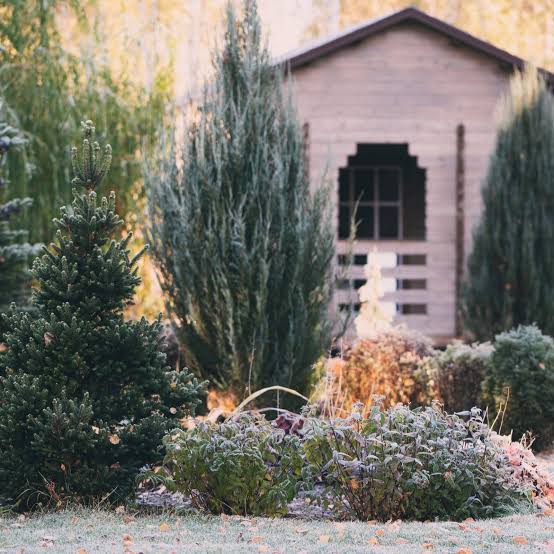

Evergreens are tough, resilient, and built to take on the challenges life throws at it. They are a staple in landscapes as focal points, accents, year-round privacy screening and more. Once strong and established it will overwinter on its own and preform as a long-lived specimen. If your evergreen is new to the garden this year offer it a little protection!
The goal when overwintering an evergreen is to avoid drying out, new roots and shoots are still tender and susceptible to environmental damage. Here are some methods used to protect evergreen trees and shrubs from winter damage.
Watering into the Fall
While temperatures are above freezing it is crucial to keep watering into the fall. This ensures the roots are well hydrated and protected. Water trees and shrubs deeply and infrequently, soak the root ball for up to 15 minutes so that the ground is well saturated, not to the point the water is pooling. Before watering again in 3-5 days, check the soil for moisture by sticking your finger down into the soil up to the first knuckle. If the soil is dry its time to water again.

Mulch
It is a little harder for trees/shrubs to regulate themselves when still establishing in their new environment. Over the winter freezing weather and snow coverage actually insulate roots and help regulate the plant, because they are evergreen and do not go into dormancy. However, when that hot winter sun shines down and melts all that insulation, the roots are slowly warmed up again. Cycles of freezing and thawing can be somewhat stressful on the plants and that is the purpose of mulch.
Mulching before winter helps retain moisture and shields roots below. Apply a layer of mulch around the base of trees and shrubs; a 2–3-inch layer of mulch keeps roots insulated. Do not heap mulch against the trunk and leave some space for air to circulate around the trunk or branches.
Winter Burn

Freezing wind can dry out tender needles and branches resulting in bronze colored, crispy needles. This environmental stress injury is called winter burn. Plants that are installed in otherwise exposed areas, open to high winds and bright direct sunlight, are the most vulnerable. To avoid burn symptoms consider spraying the tree with antidesiccant. This product acts as a waxy coating that prevents the needles from transpiring water; it’s like a sunscreen for trees. Whispering Hills carries a product by Bonide called “Wilt Stop” that works great for evergreen trees and shrubs. Whatever product used, make sure to read the label and instructions closely to get the desired results.
Wrap in Burlap
Wrapping evergreens with burlap can help exposed/windward trees as well. Starting from the bottom, at the trunk, lightly wrap your way up to the top of the tree. The burlap should be loose enough for the tree to breathe but snug enough to hold on in high winds. Leave the top of the burlap open for sun to be able to get through. Here are a few evergreen varieties that benefit from a year or two of overwintering prep.

Evergreens are tough, resilient, and built to take on the challenges life throws at

In an era where sustainability is more than a buzzword, Whispering Hills Garden Center

June is National Pollinator Month, a perfect time to celebrate the essential role pollinators